
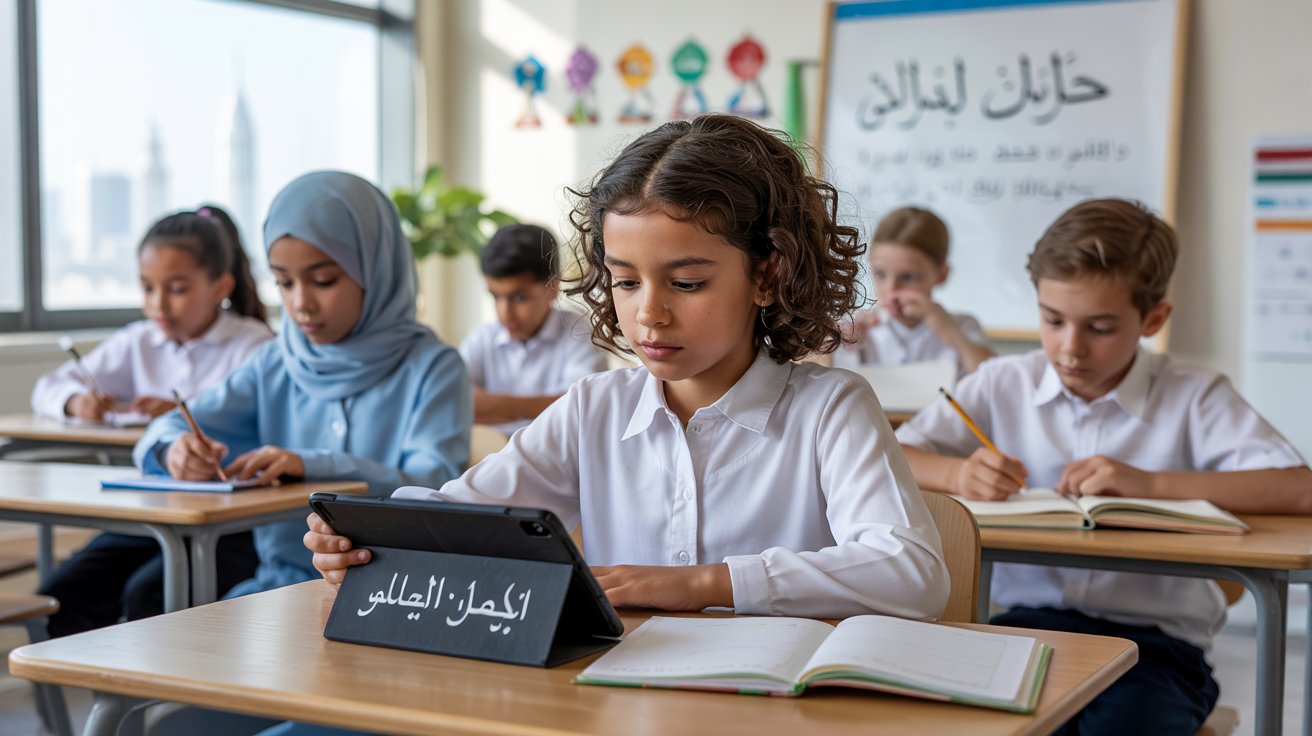
Arabic holds the position of being the third most spoken language worldwide while it maintains essential cultural significance for people around the globe. The study of Arabic provides students with academic advantages and worldwide job prospects and cultural understanding of Arabic because more than 300 million people speak it as their native language, and it serves as one of the official languages used by the United Nations. Students in Dubai and throughout the UAE require Arabic learning because it extends beyond academic needs to become an essential ability for their future development.
At Discover Learning Tutors, we understand that Arabic learning for school students is challenging at first. Any child can learn the subject successfully when they receive proper direction, systematic teaching methods, and continuous assistance. The modern, effective, student-friendly educational methods of the 2026 Arabic language are the main agenda for today’s blog. Let’s dig in!
How can school students start learning Arabic from scratch without feeling overwhelmed?
The process of learning a new language brings major difficulties to people, especially for English speakers because they have to adapt to both new writing systems and their linguistic rules. But we don’t want to add to the pressure. Our goal is to help our readers come out meritoriously with effective learning processes that exist in the space between two different approaches.
Firstly, students need to start with the basics of Arabic alphabets. As we generally know that the Arabic writing system uses a right-to-left direction, it makes different letters appear differently according to their position in a word. By doing so, the fundamental aspect of the language will be sorted to an extent.
Secondly, one must focus on sounds and pronunciation in the language, for which external help is often required. The Arabic language contains special letters, which require students to learn through supervised exercises.
To make learning Arabic fast for beginners, it is generally advised that students not rush to learn everything at once. Basic words and simple sentence structures serve as the initial learning requirements for beginners before they can master everyday speaking vocabulary.
Students who want to learn Arabic quickly should receive proper guidance to help them learn without feeling pressured or confused. At Discover Learning Tutors we create personalized plans that allow children to progress step by step while building their understanding and self-assurance.
What are the most effective daily habits that help students improve in Arabic quickly?
Long study sessions are not as effective as consistency. Arabic proficiency can be greatly increased, and academic performance can be accelerated with small and simple daily routines.
- Every day, dedicate 20 to 30 minutes to vocabulary revision.
- Read brief passages in Arabic aloud.
- Play audio snippets in Arabic.
- Every day, write five to ten short sentences.
The habit of keeping a vocabulary notebook is always beneficial. Students should maintain a small journal to record the Arabic words that they discover every day together with their definitions and example sentences. This learning process will benefit them by enhancing both exam performance and memory retention abilities.
One of the optimal methods for learning Arabic is spaced repetition because it requires students to study vocabulary at predetermined times. Continuous practice establishes long-term memory better than studying all material right before an assessment. The Arabic tutoring in Dubai for children uses interactive activities together with assessments and controlled assignments to help students develop essential study skills.
How can parents help their child practice Arabic at home even if they don’t speak the language?
Many parents fear that, because they are not proficient in Arabic, they will not be able to help their child learn the language. The good news is that structure and encouragement are more important than fluency.
Here are some ways parents can assist to improve Arabic reading and writing:
- Establish a dedicated study period each day.
- Have kids read aloud from Arabic.
- Utilize flashcards to review.
- View educational cartoons in Arabic.
- Give credit for advancements and minor enhancements.
To monitor the child’s progress and identify areas for growth, parents can also have regular conversations with special Arabic tutors in Dubai. With them, it becomes considerably simpler to develop Arabic reading and writing abilities organically and confidently in a supportive home environment.
What simple reading and writing strategies make Arabic easier for school students to master?
Although kids often find reading and writing difficult, basic structured tactics can have a significant impact. Here are some ways that make it easy for kids to get a grip on the language!
- Reading exercises using phonics: Students can independently decipher new words when they comprehend the sounds.
- Brief reading texts per day: Increase the difficulty gradually as your confidence increases.
- Practice copywriting: Rewriting textbook passages enhances spelling and handwriting precision.
- Exercises for crafting sentences: Give kids new Arabic words to help them construct simple phrases.
- Practice of dictating: Writing and listening together enhance spelling and grammar.
How can students build Arabic vocabulary fast using fun, modern learning tools?
Today, writing and reading comprehension continue to suffer from a lack of robust vocabulary. Here are some methods to help expand Arabic vocabulary for students in a fun way:
- Use of Apps for flashcards with spaced repetition
- Take up challenges for the day
- Sit for interactive Tests
- Try reading short Arabic novels
- Spend some time on YouTube instructional videos
One proven fact is that engagement and interest towards anything is raised through gamified education. As far as learning a language is concerned, beginners learn Arabic more quickly and retain material better when the process is enjoyable.
To offer the most effective Arabic learning methods in today’s digital environment, we at Discover Learning Tutors combine modern technology with fun and enjoyable lesson planning.
What’s the best step-by-step plan for students to go from basic to fluent Arabic?
The following structured plan provides a framework for Arabic classes for kids:
Step 1: Start from the basics
The student needs to learn the various letter shapes together with the different vowel symbols.
Step 2: Build foundational vocabulary
One needs to learn basic vocabulary, which includes common words and phrases.
Step 3: Learn essential grammar rules
Students must acquire fundamental grammar rules, which involve understanding sentence construction and verb application.
Step 4: Strengthen reading skills
Arabic reading and writing skills will improve through the practice of regular comprehension exercises that match their current reading abilities.
Step 5: Develop writing confidence
Students can practice writing through two activities: paragraph development and exam preparation.
Step 6: Students will practice their speaking and listening skills through conversational exercises that foster more natural, confident speech.
Step 7: Regular assessments
The system measures student progress by assessing their understanding of effective Arabic study methods and their ability to correct errors early in learning.
Students in Dubai can receive professional Arabic tutoring, for instance, the one we provide at Discover Learning Tutors, where we provide expert guidance throughout the learning process, helping children face the challenges of the language on their own.
Conclusion
People can learn Arabic in 2026 without experiencing stress or difficulty. Daily learning practice just needs a proper structure and expert guidance to enable students to achieve language mastery.
At Discover Learning Tutors, we provide the best ways to learn Arabic for school students, which include structured Arabic classes and customized lesson plans and professional Arabic tutoring services in Dubai. Our teaching strategies help children learn Arabic quickly. Our experienced tutors are all here to help your child learn Arabic through the best learning methods available.
FAQs
1. How long does it take for school students to learn Arabic?
The students show visible improvements during the first 3 to 6 months when they include daily Arabic practice in their routine.
2. Is Arabic difficult for beginners?
Arabic presents initial challenges for beginners, but with proper guidance and effective Arabic study techniques, users can master the language.
3. Can students learn Arabic without a tutor?
Yes, but students in Dubai benefit from expert tutors who teach them correct pronunciation and proper grammar through structured lesson plans.
4. What is the best age to start learning Arabic?
The primary school period is the most suitable time for students to begin their Arabic studies.
5. What are the best ways to learn Arabic quickly?
The most effective methods for Arabic learning combine daily practice with vocabulary development, organized lessons, and teacher-assisted learning.