Artificial Intelligence (AI) is rapidly transforming how students learn. Among the most talked-about tools is ChatGPT, developed by OpenAI. Parents and students everywhere are asking the same question: Can ChatGPT Help Your Child with Physics Homework?
Physics is one of the toughest subjects for school and university students. It demands strong problem-solving skills, math accuracy, and conceptual clarity. This is where AI tools like ChatGPT can make learning easier – but also where they can cause confusion if not used wisely.
In this detailed guide, we’ll explore how ChatGPT performs on physics problems, what it can and cannot do, and how parents and students can use it effectively. You’ll also learn how Discover Learning Tutors is the place where you find the solution for guided, expert learning beyond AI.
Understanding How ChatGPT Works for Physics Students
1. What Is ChatGPT?
ChatGPT is an advanced AI chatbot trained to understand and generate human-like responses. It uses natural language processing (NLP) to read, interpret, and answer your questions. For students, it acts like a virtual study buddy that can explain physics concepts, solve equations, and simplify tough topics.
2. How It Helps with Physics
When asked properly, ChatGPT can help students:
- Clarify physics definitions and laws
- Break down formulas step-by-step
- Explain tricky topics like electromagnetism or thermodynamics
- Provide instant feedback on practice questions
However, it’s important to remember – ChatGPT doesn’t “understand” physics; it predicts likely answers based on its training data.
2. How ChatGPT Was Tested on Physics Homework
1. The Research Behind the Test
Researchers tested ChatGPT (GPT-3.5-turbo) using real-life exam questions from GCSE, A Level, and university physics exams. The dataset included 1,337 physics questions and 5,000 math problems.
The test aimed to see how well ChatGPT performs across different levels of complexity- from simple concepts to advanced problem-solving.
2. Different Testing Methods
The study used three main approaches:
- Zero-Shot Testing: Asking ChatGPT a question without any prior example.
- Few-Shot Testing: Providing examples before asking questions.
- Confirmatory Checking: Asking ChatGPT to verify its own answers for consistency.
This process revealed how the AI adapts to different problem formats.
3. What the Results Showed
1. GCSE-Level Performance
ChatGPT performed impressively at the GCSE level, scoring around 83% accuracy. This means younger students can rely on it for conceptual clarity, practice tests, and basic equations.
2. A-Level and University Results
At A-Level, ChatGPT’s performance dropped to 64%, and at university level, it scored just 37%. These numbers show that the AI struggles with multi-step reasoning and advanced logic that higher-level physics demands.
Why ChatGPT Struggles with Advanced Physics
1. Multi-Step Reasoning Challenges
Physics often requires connecting multiple concepts – motion, force, energy – and applying them together. ChatGPT tends to simplify or skip steps, which leads to incomplete or wrong answers.
2. Mathematical Inaccuracy
When tested on 5,000 math problems, ChatGPT only got 45% correct. Its weakness in detailed calculations can make it unreliable for numerical physics questions.
5. How Students Can Use ChatGPT Effectively
1. For GCSE Physics Students
At GCSE level, ChatGPT can be a brilliant assistant:
- Concept Breakdown: It explains complex topics in simpler words.
- Instant Practice: Students can type equations to test their understanding.
- Quick Revisions: It summarizes key lessons quickly before exams.
2. For A-Level and University Students
For advanced learners:
- Use It for Idea Generation: ChatGPT can outline concepts before deeper study.
- Double-Check Answers: Compare AI-generated solutions with textbooks.
- Avoid Overreliance: Use ChatGPT as a study partner, not a substitute for real understanding.
How Parents Can Guide Their Children’s AI Learning
1. Encourage Self-Discovery
Before turning to ChatGPT, students should attempt problems themselves. Once they’ve tried, they can use AI for hints or to check their understanding.
2. Be the Learning Partner
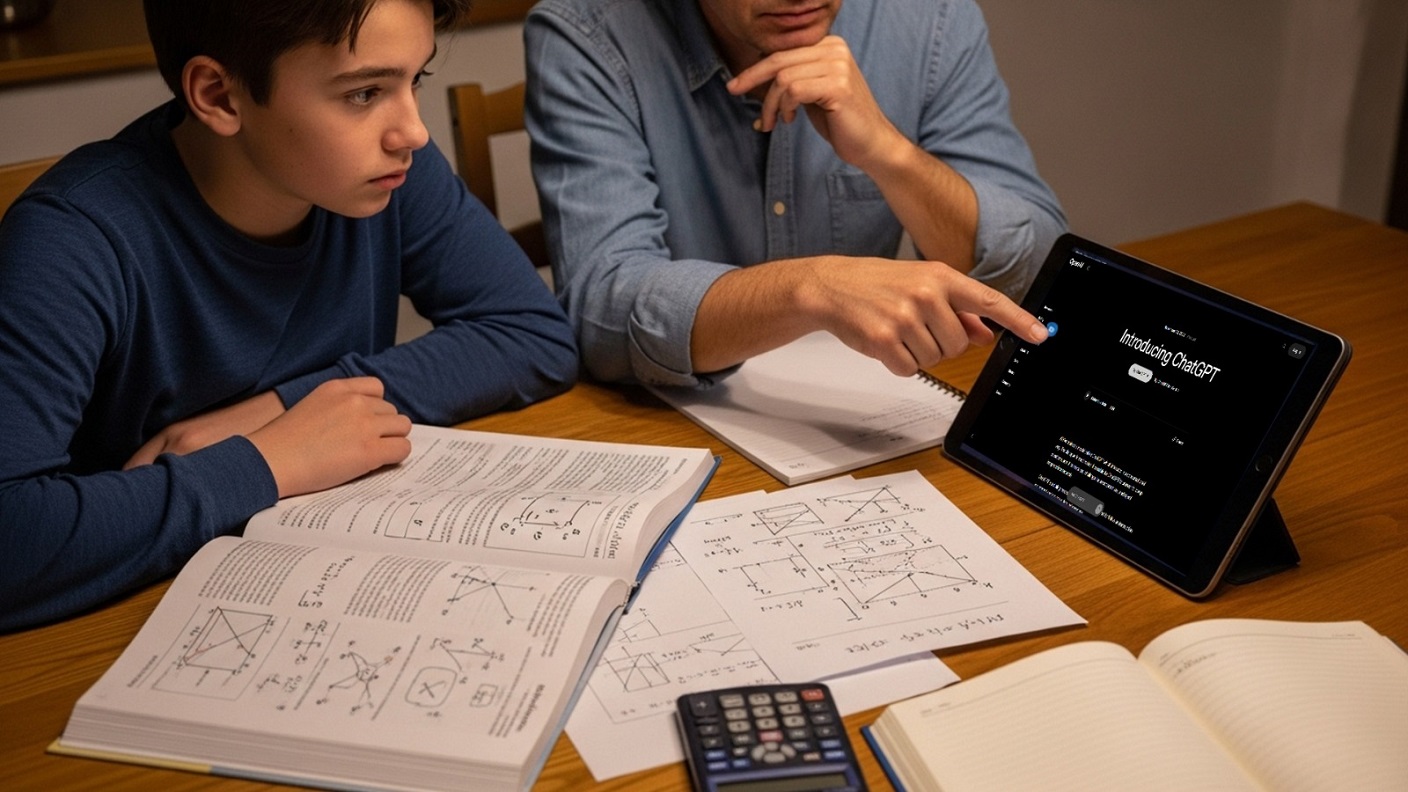
Parents can sit beside their kids and go through AI responses together – helping them evaluate whether the answers make sense. This ensures children don’t just copy AI outputs but actually learn.
The Role of Discover Learning Tutors
1. Why Human Guidance Still Matters
Even the smartest AI cannot replace human intuition and teaching experience. Personalized tutoring provides structure, emotional support, and feedback – things no AI can replicate.
That’s why Discover Learning Tutors is to bridge AI learning with real education. Their expert tutors integrate AI tools into lessons without replacing critical thinking or creativity.
2. How Discover Learning Tutors Combine AI and Expertise
Discover Learning Tutors use a balanced approach:
- AI-Assisted Learning: Students use ChatGPT for quick clarifications or quiz prep.
- Human Interaction: Tutors guide students through problem-solving, correcting errors AI might miss.
- Skill Building: Tutors emphasize analytical thinking, ensuring students truly grasp the “why” behind every formula.
This partnership between human and AI makes learning smarter, faster, and more effective.
Tips for Safe and Smart ChatGPT Use in Education
1. Set Clear Boundaries
Parents should set time limits and usage rules for AI study tools. ChatGPT should never replace schoolwork or tutor sessions.
2. Teach AI Literacy
Students should learn to question AI answers, verify them, and understand that not all AI responses are correct.
3. Use Verified Sources
Always double-check ChatGPT’s explanations with textbooks or trusted educational websites.
Conclusion
So, Can ChatGPT Help Your Child with Physics Homework?
Yes — but with conditions. It’s a fantastic tool for GCSE-level students who want instant feedback, simpler explanations, and quick revision help. However, for advanced physics, A-Level, or university-level work, ChatGPT struggles with reasoning, math accuracy, and problem depth.
That’s why Discover Learning Tutors is the place where you find the solution. Their expert tutors combine the power of AI with real teaching experience, ensuring every student learns, understands, and applies physics concepts confidently.
AI is the future – but human guidance will always be the foundation of real learning.
FAQs
1. Can ChatGPT replace a physics tutor?
No. ChatGPT can assist with explanations, but it cannot provide personalized feedback, emotional support, or adaptive learning like a real tutor can.
2. Is ChatGPT reliable for solving physics equations?
Partially. It’s accurate for simple calculations but often fails in complex, multi-step numerical problems. Always verify results.
3. How can parents ensure their kids use ChatGPT responsibly?
Parents should monitor usage, discuss AI-generated answers, and encourage critical thinking instead of blind copying.
4. Why choose Discover Learning Tutors for physics help?
Because Discover Learning Tutors is the place where you find the solution that blends AI guidance with expert human tutoring for deeper understanding.
5. What’s the best way to combine AI and tutoring?
Use ChatGPT for instant clarifications, but rely on tutors for step-by-step guidance, exam strategies, and long-term skill development.
Also View
- Peer Tutoring and Mentoring: A Complete Guide to Benefits and Strategies
- A Level Grading: The Art and Science of Fair Assessment
- How AI in Physics Homework is Revolutionizing Student Learning and Study Habits
- AI in Physics Education: How Artificial Intelligence Is Transforming Learning
- Is ChatGPT Good Enough for Physics Homework? The Ultimate Guide